

One moment you are pushing off for a pickup basketball game or a tennis serve. The next, you hear a pop and feel as if someone kicked you in the back of the leg. Once the shock fades, the biggest question is usually how long it will take to get back. This post outlines what Achilles tendon repair recovery typically looks like, stage by stage, in Austin and Leander.
Understanding the Injury Before the Timeline
The Achilles tendon connects your calf muscles to your heel bone and powers every step, jump and sprint. An Achilles tendon rupture often happens during sudden bursts of activity, especially in sports that involve running, pivoting and jumping. Common signs include a popping sensation, pain and swelling behind the ankle and trouble rising up on your toes.2
Not every rupture requires surgery. Some patients do well with nonsurgical treatment in a cast or boot.1,2 For others, especially active people who want to return to demanding activities, Achilles tendon repair may be recommended to reconnect the torn tendon ends. When you see us, your care is guided by a board certified, fellowship trained orthopedic foot and ankle surgeon who serves as a Clinical Instructor of Orthopedic Surgery with Dell Medical School.
Open Versus Minimally Invasive Repair
Traditional open repair uses a longer incision to expose and sew the tendon ends. Minimally invasive Achilles repair uses a much smaller incision and a special device to capture and repair the tendon. A smaller incision may be easier on the surrounding soft tissue for some patients, but the tendon still needs the same time to heal. Which approach suits you depends on the injury pattern, timing and your health.
The First Two Weeks: Protection and Swelling Control
Right after surgery, your ankle is typically placed in a splint with your toes pointed slightly downward to protect the repair. During this stage, you will usually keep weight off the leg and use crutches or a knee scooter. Elevating your leg and following your postoperative instructions carefully can help control swelling and protect the incision while it heals.
Weeks Two to Six: Moving Into a Boot
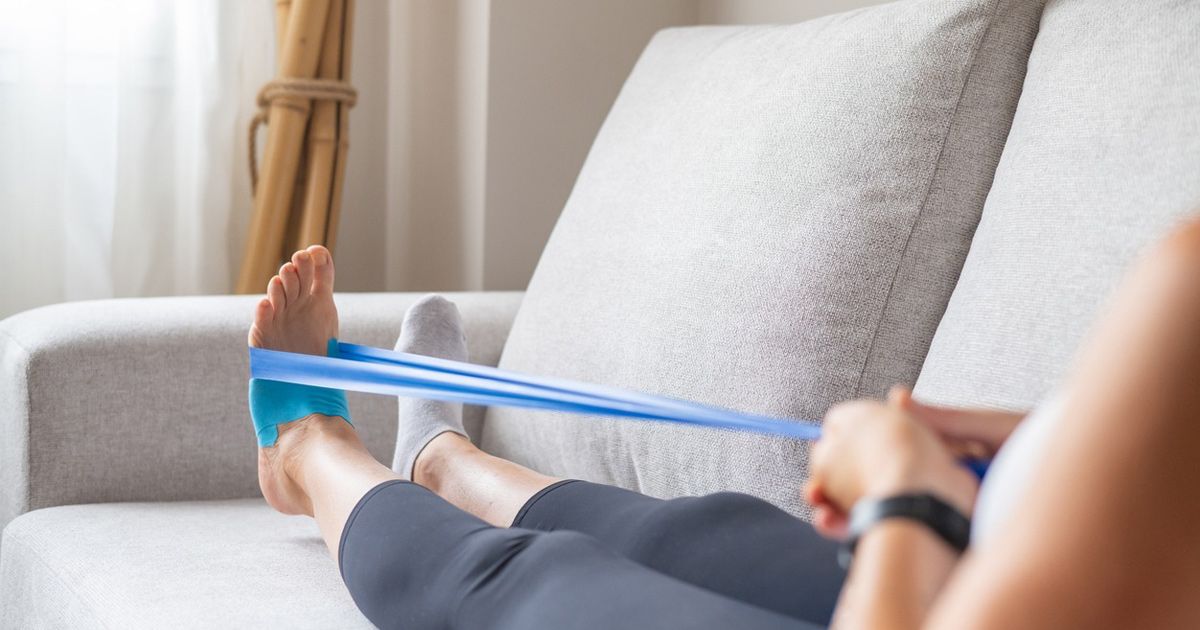
Once the incision has healed enough, many patients transition into a walking boot, often with heel wedges that are gradually removed over time. Weight bearing may be advanced step by step according to our protocol. Gentle range of motion exercises often begin during this window, while forceful stretching of the tendon is generally avoided.3
Weeks Six to Twelve: Rebuilding Strength
Around this stage, many people begin transitioning out of the boot and into supportive shoes. Physical therapy usually becomes more active, focusing on calf strength, balance, gait and flexibility. Your calf may feel noticeably weaker than the other side, which is normal at this point. Progress can vary quite a bit from one person to another.
Three to Six Months and Beyond: Returning to Activity
Many patients return to most daily activities within a few months. A gradual return to jogging may be considered somewhere in the range of three to six months for some people, if strength and control allow. Returning to competitive or demanding sports often takes six months to a year, and some patients need longer.3 If you are an athlete in Austin or Leander, a structured plan for sports injuries can help you work back toward your sport safely.
Factors That Can Affect Your Recovery
Several factors may shape your timeline, including your age, overall health, the severity of the tear, how soon treatment begins and how consistently you follow your rehab plan. Smoking, diabetes and certain medications can slow tendon healing. Pushing too hard too early can risk a new injury, so patience is part of the process.
Frequently Asked Questions About Achilles Repair Recovery
When can you walk after Achilles tendon surgery?
Many patients begin protected walking in a boot within a few weeks after Achilles surgery. The exact timing depends on the repair and our protocol.
How long are you in a boot after Achilles repair?
Patients commonly wear a boot for several weeks, often until around the two to three month mark. Your progress and protocol determine when you can move to regular shoes.
Can an Achilles tendon tear again after surgery?
Yes, a second tear is possible, although the risk appears low for many patients who follow their rehabilitation plan. Avoiding sudden, forceful loading too early helps protect the repair.
When can you drive after Achilles surgery?
Driving depends on which leg was repaired and whether you can safely control the pedals. Many people with a repair on the right leg wait until they are out of the boot and cleared by us.
Will your calf be as strong after Achilles repair?
Many patients regain good strength, though some notice mild lasting differences in calf size or power. Consistent physical therapy plays a major role in rebuilding function.
Plan Your Path Back to Full Activity
Recovering from an Achilles repair is a gradual process, and having a clear plan from the start can make it easier to stay on track. Every injury is different, so your timeline should be built around your tendon, your health and your goals. If you are dealing with an Achilles injury, you can request an appointment online at our Austin or Leander office.
References
- AAOS OrthoInfo. Achilles Tendon Rupture (Tear). American Academy of Orthopaedic Surgeons. https://orthoinfo.aaos.org/en/diseases--conditions/achilles-tendon-rupture-tear/
- FootCareMD. Achilles Tendon Tear. American Orthopaedic Foot & Ankle Society. https://www.footcaremd.org/conditions-treatments/ankle/achilles-tendon-tear
- FootCareMD. Achilles Tendon Rupture Surgery. American Orthopaedic Foot & Ankle Society. https://www.footcaremd.org/foot-and-ankle-treatments/ankle/achilles-tendon-rupture-surgery
Dr. Andrew Ebert, MD is a board-certified, fellowship-trained orthopaedic foot and ankle surgeon serving patients in Austin and Leander, Texas. He earned his medical degree from the University of Texas Medical Branch, completed his orthopaedic residency at Baylor College of Medicine, and trained in foot and ankle surgery at OrthoCarolina's O.L. Miller Foot and Ankle Institute. A partner at Orthopaedic Specialists of Austin since 2007, he cares for athletes at UT Austin and Austin FC.